Instant Download
Your unique download link appears right after you complete your purchase, and is also sent instantly to the email address you provided.
Couldn't load pickup availability
Your unique download link appears right after you complete your purchase, and is also sent instantly to the email address you provided.

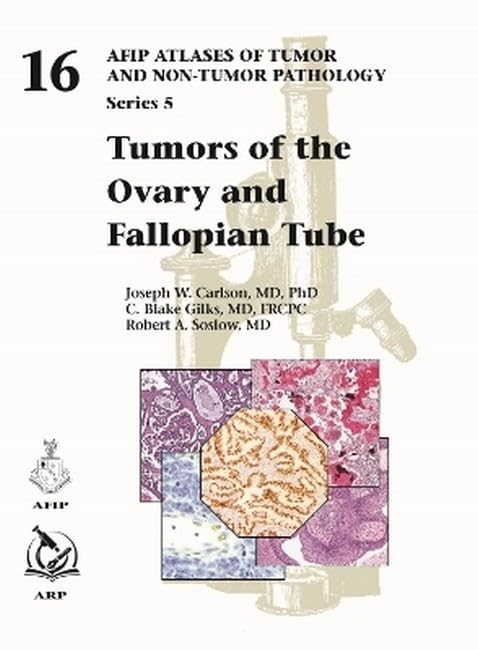
"The complexity of ovary and fallopian tube pathology is striking, with dozens of tumor types, yet it is remarkable how the morphology-based classification has subsequently been validated by molecular techniques. Entities described in 1998 have been shown to have characteristics and nonoverlapping molecular features, with few exceptions. Genomic characterization of ovarian carcinoma has demonstrated that the histotypes are different diseases, with the refinement of separation of low-grade serous and high-grade serous carcinomas into distinct entities. In the sex cord-stromal category, adult granulosa cell tumor is not part of a continuum with juvenile granulosa cell tumor but is a different disease, characterized by a recurrent point mutation in FOXL2, even in tumors with atypical features such as bizarre nuclei. Molecular pathology as provided tools to allow reliable diagnosis of rare tumors such as small cell carcinoma of hypercalcemic type, which is characterized by mutations in SMARCA4. There is also a greater appreciation now of the importance of hereditary cancer syndromes in ovarian and tubal malignancy, as both of the common autosomal dominant hereditary cancer syndromes include carcinomas of ovary or fallopian tube. This book is organized following the structure and terminology of the World Health Organization (WHO) 'Female Genital Tumors', 5th edition. It includes some new entities that have been described since that book's publication in 2020 and provides detailed discussion of differential diagnosis and relevant ancillary tests and strategies to approach diagnosis. In addition, discussions of the underlying biology of these tumors, as it relates to their diagnosis, are also presented."--